
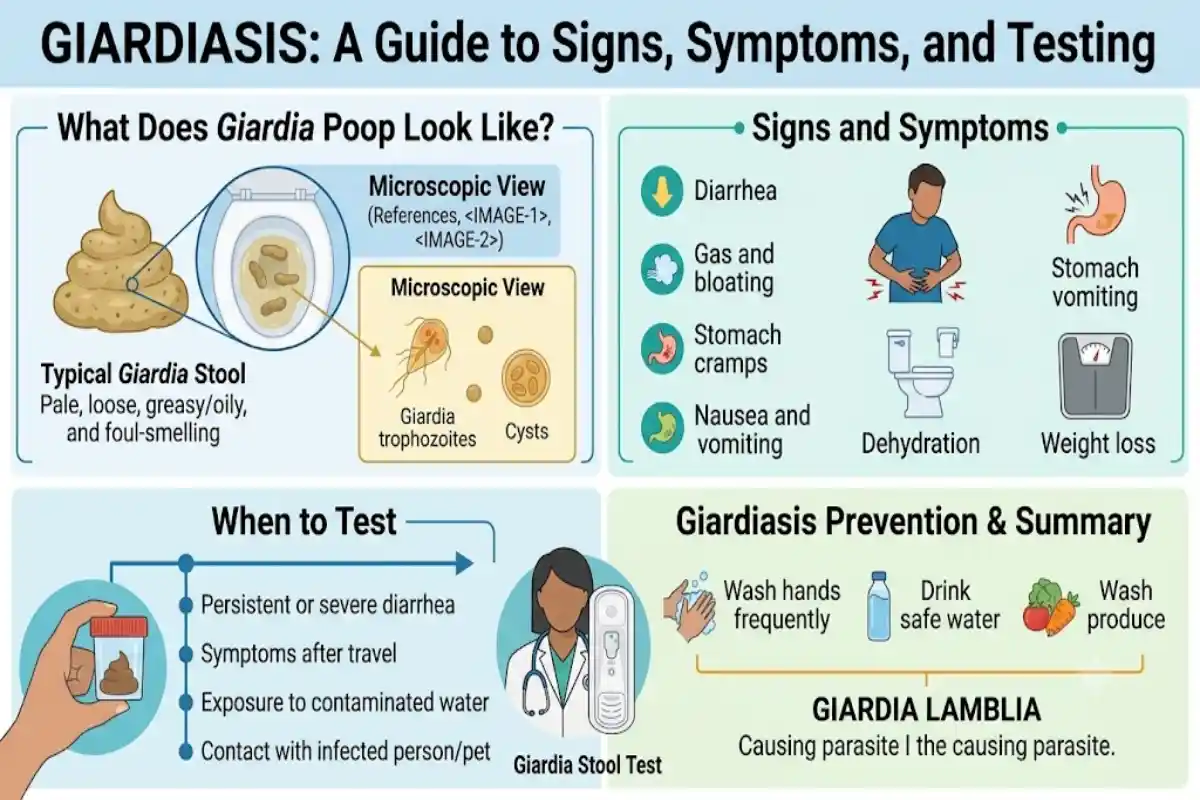
If you’re wondering what does giardia poop look like, the most recognisable description is stool that becomes loose, greasy and particularly foul-smelling. It may also float in the toilet because of increased fat content. But there is an important distinction: these characteristics can raise suspicion for giardiasis, but they cannot diagnose it.
Giardia poop can be loose or watery, foul-smelling, greasy, and in some cases it floats. A change in stool alone is not enough to diagnose a Giardia infection, as a lot of digestive problems can result in similar signs.
Giardia is a small parasite (a living thing) called Giardia duodenalis that infects the gut. Some people have no symptoms, while others may get diarrhoea, wind, stomach cramps, nausea, bloating and pale, greasy stool.
What Does Giardia Poop Look Like?
What does Giardia poop look like? Typical Giardia-related stool may have several characteristics:
| Stool characteristic | What you may notice |
|---|---|
| Consistency | Loose, soft or watery |
| Appearance | Sometimes greasy or oily |
| Colour | Can vary; colour alone is not diagnostic |
| Odour | Often unusually strong or foul-smelling |
| Floating | May float because of increased fat in the stool |
| Frequency | Diarrhoea may occur several times a day |
| Duration | Symptoms commonly continue for 2–6 weeks |
The CDC specifically lists smelly, greasy poop that can float among the common short-term symptoms of Giardia infection.
The CDC assures us that for most people, short term manifestations of Giardia include diarrhoea, gas, smelly, greasy stool that may be floating, and stomach cramps and nausea. Read the CDC’s entire article on the symptoms of Giardia infection for more insights into when and how these symptoms occur and for how long.
Why does the stool appear greasy? Due to partial absorption of nutrients from the small intestine by Giardia, the stool may be greasy. Malabsorption usually causes greasy stool, but it isn’t exclusive to Giardia.
Why Can Giardia Cause Greasy, Floating Stool?
Giardia is a parasite that resides in the small intestine. Giardiasis can result in poor absorption of nutrients such as fats. Increased Fat and Greasiness
If a greater amount of fat is in the stool, the stool can look greasy or oily, and the stool can sometimes float. The CDC states Giardiasis may lead to reduced absorption of nutrients such as fats and vitamin B12 in certain situations.
This explains why the classic description isn’t simply “diarrhoea.” The combination of persistent diarrhoea + strong odour + greasy/floating stool + gas or abdominal discomfort is more suggestive of Giardia than any one stool characteristic by itself.
Other Symptoms That Can Occur With Giardia
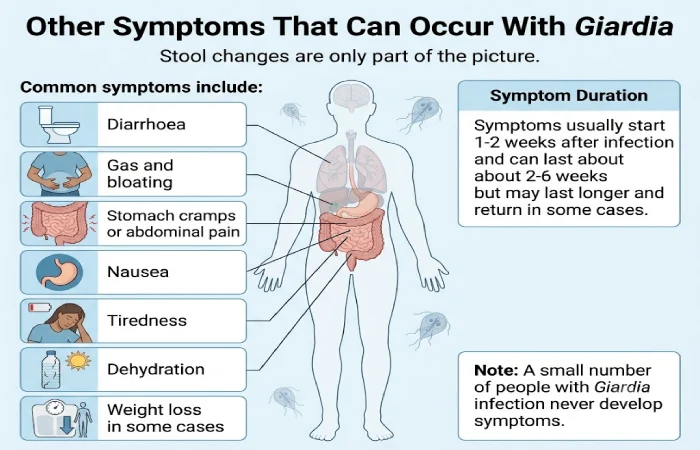
Stool changes are only part of the picture.
Common symptoms include:
- Diarrhoea
- Gas and bloating
- Stomach cramps or abdominal pain
- Nausea
- Tiredness
- Dehydration
- Weight loss in some cases
Symptoms usually start 1-2 weeks after infection and can last about 2-6 weeks but may last longer and return in some cases. A small number of people with Zika virus infection never develop symptoms.
Giardia Stool vs. Ordinary Diarrhoea
| Feature | Possible Giardia | Ordinary diarrhoea |
|---|---|---|
| Loose/watery stool | Common | Common |
| Strong odour | Can occur | Can occur |
| Greasy appearance | More suggestive | Less specific |
| Floating stool | Can occur | Can occur |
| Gas/bloating | Common | Possible |
| Abdominal cramps | Common | Possible |
| Symptoms lasting weeks | Possible | Depends on cause |
| Diagnosis from appearance alone | No | No |
The key point is that stool appearance has low specificity. A person cannot reliably determine the cause of diarrhoea simply by looking at it.
Does Giardia Poop Always Float?
No. It may have floating stool. According to the CDC, Giardia stool may be greasy and float, and according to the Mayo Clinic, Giardia stool may be watery, have a bad smell, be soft or greasy.
Reasons for floating stool other than infection: Floating gas or excessive gas in the stomach can cause stool to float. Other conditions that can cause greasy stool may be related to digestion or absorption of fats. So, just floating poop alone can not be proof that you have Giardia.
Can You Tell If You Have Giardia by Looking at Your Poop?
No. This is one of the best tips for understanding stool changes. Giardia is a tiny parasite. Giardia itself isn’t something you can see in a stool sample with the naked eye. It can only be diagnosed in a laboratory.
You may be asked to provide one or more stool samples. Several samples may be required because Giardia does not always live in sufficient numbers in each stool. Depending on the laboratory and the specific clinical circumstance, testing may involve microscopic examination, molecular test, or antigen test.
When Should You Get Tested for Giardia?
Consider speaking with a healthcare professional if you have persistent diarrhoea or other symptoms consistent with Giardia, particularly if you have had a potential exposure.
Possible exposure situations include:
- Drinking untreated water from a lake, river, spring or shallow well
- Accidentally swallowing recreational water
- Close contact with someone infected with Giardia
- Exposure in childcare settings
- Travel involving potentially unsafe drinking water
- Contact with contaminated surfaces or objects
Giardia infection happens when someone consumes the parasite, which is possibly contaminated in water, food, or on surfaces, and contacts or ingests it with infected stool.
When diarrhea continues, testing can also be of value, as many sorts of infections and other stomach health conditions can cause the same symptoms.
How Is Giardia Diagnosed?
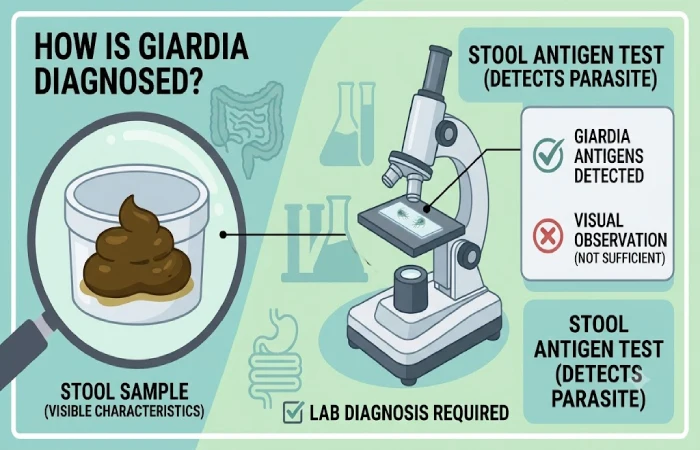
A healthcare professional generally diagnoses Giardia by testing stool rather than relying on appearance.
| Diagnostic approach | What it looks for |
|---|---|
| Stool antigen test | Giardia-related antigens |
| Molecular/PCR testing | Giardia genetic material |
| Microscopy | Giardia cysts or trophozoites |
| Multiple stool samples | Improves the chance of detecting intermittent shedding |
The CDC notes that several stool samples collected over different days may be requested because Giardia may not be detectable in every specimen.
This is why a single negative sample does not always completely settle the question when clinical suspicion remains high.
How Is Giardia Treated?
How can Giardia be treated? Treatment will depend on the individual case. Doctors have various prescribed drugs to treat Giardia, and may recommend specific ones depending on your health history, nutritional status, and immune-system health.
And if there’s diarrhoea, you need to stay well-hydrated as well. Passing a lot of fluid can result in dehydration – which is especially risky for babies.
If there are no symptoms, medication may not be necessary and treatments should be discussed with a doctor, and not just on the appearance of the stool.
When Is Diarrhea a Reason to Seek Medical Care?
Seek medical advice when diarrhea is persistent, severe, or accompanied by concerning symptoms such as significant dehydration.
Medical attention is particularly important for:
- Infants with diarrhoea
- People showing signs of dehydration
- People with prolonged diarrhoea
- People experiencing significant weight loss
- People with a weakened immune system
- People who have had a known Giardia exposure
Persistent symptoms matter because Giardia can sometimes cause longer-term digestive problems, including recurrent diarrhoea and difficulties absorbing nutrients.
Conclusion
What does Giardia poop look like – If you are researching the appearance of Giardia stool, the most common answer is loose or watery and possibly greasy stool that may be abnormally foul-smelling and buoyant. But those are just signs – not a diagnosis. The range of signs associated with giardiasis includes diarrhea and the telltale watery appearance of stool as well as many other stomach infections or conditions that can produce the same symptoms, and require a doctor’s diagnosis and, when appropriate, testing.