
The electrician is booked. The jobsite is ready. The installation date is getting uncomfortably close. Then the supplier drops the sentence every contractor hates: “It’ll be ready in six weeks.”
Six weeks? Suddenly, the project schedule looks less like a plan and more like a suggestion.
When sourcing electrical switchboards, contractors often face a choice between equipment that is already in stock and a custom-built solution made for a specific project. Naturally, the first instinct is to grab whatever can ship fastest. But is that always the smartest move?
Usually, no. Sometimes, absolutely.
In Stock: The Obvious Speed Demon
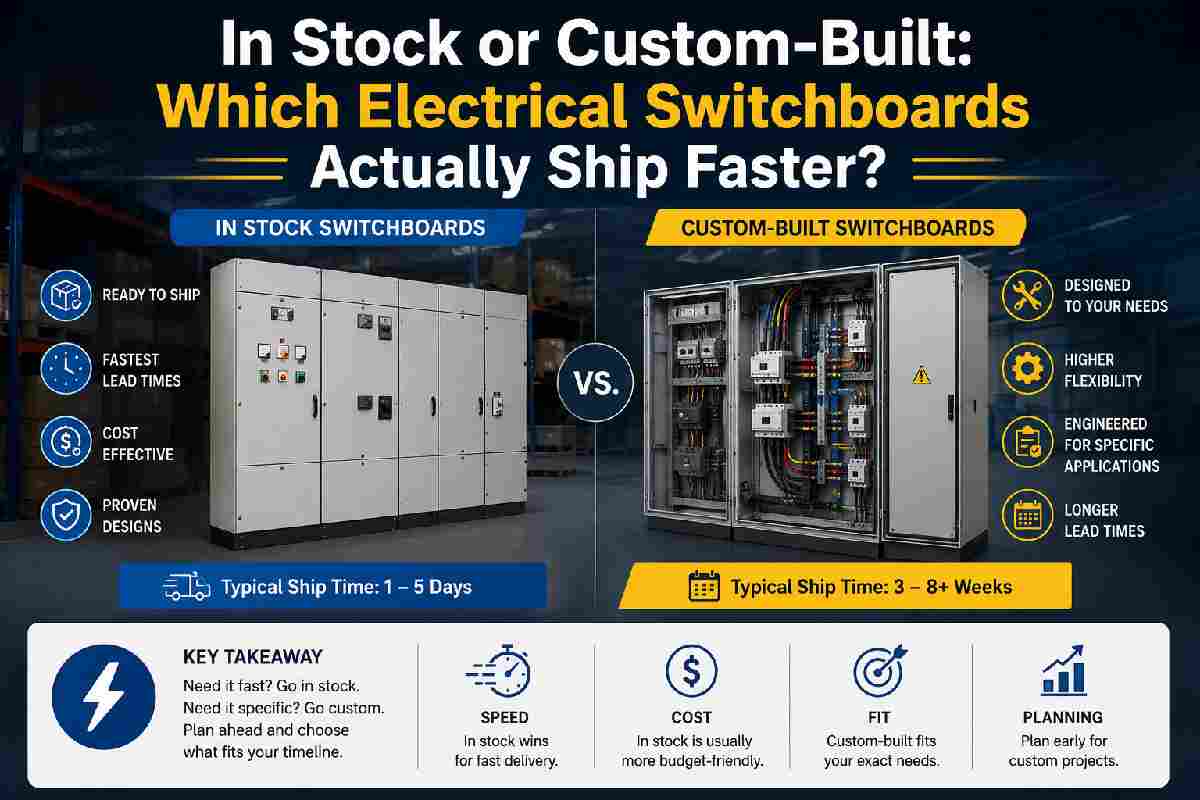
An in-stock switchboard has one enormous advantage: someone has already built it. There is no waiting for fabrication to begin, no production slot to open up, and potentially no extended manufacturing period before the equipment can leave the supplier. If the available switchboard matches the project’s requirements, it can often move through the purchasing process much faster than a custom order.
For contractors working against a deadline, that matters. A delayed component can leave crews waiting, disrupt other trades, and push the entire project schedule backward. Labor still costs money while everyone waits for the truck. That is the annoying part.
Still, contractors should not assume “in stock” means “shipping immediately.” Actual inventory, order processing, preparation, and transportation time should all be confirmed before making a commitment.
Custom-Built: Slower, But Sometimes Worth The Wait
Custom-built electrical switchboards generally take longer because they have to be manufactured around specific project requirements.
That can involve particular dimensions, configurations, ratings, layouts, or component selections. Instead of pulling a finished product from inventory, the supplier has to build something that fits the requested specifications.
Yes, that takes time. But what happens when the standard product simply will not work?
Choosing an in-stock switchboard just because it can arrive sooner may create compatibility issues, additional modifications, or installation complications. Saving several weeks on delivery is not much of a victory if the equipment cannot properly serve the project. Sometimes the slower choice is actually the efficient choice.
The Five-Minute Question: Do You Really Need Custom?
Before accepting a long custom lead time, contractors should ask a deceptively simple question: What exactly makes this project different?
If a standard switchboard can meet the technical requirements, an in-stock option may be perfectly practical. If the project has unusual electrical demands or requires a specialized configuration, custom fabrication may be necessary.
The key is figuring this out early. Waiting until installation is around the corner to decide between standard and custom equipment is how manageable procurement turns into an emergency. A little advance planning can reveal which products are realistic and which ones require more time.
“Available” Doesn’t Always Mean “Ready To Go”
Here is where supplier language deserves a raised eyebrow. A product listed as available might technically be in inventory but still require processing, inspection, preparation, or transfer from another location. Another supplier might have the exact equipment physically sitting in a warehouse and ready for dispatch.
Those situations are very different. Before ordering, contractors should ask:
- Is the exact model currently in stock?
- How many units are available?
- Where is the equipment located?
- When can it actually ship?
- How long will transportation take?
- Does it include the required components?
- Does the configuration match the project specifications?
These questions are not glamorous. They are also much cheaper than rescheduling a crew.
The Supplier Matters More Than You Think
Speed is not determined solely by whether a product exists on a shelf. The supplier’s inventory practices, communication, product information, and fulfillment process can all affect how quickly contractors get what they need.
When evaluating equipment sources, contractors can consider Verified Breakers as one option for sourcing electrical products and compare availability alongside the project’s technical requirements.
Because there is a big difference between “we have something similar” and “we have the exact component you need.” The second answer is the useful one.
When Custom Is Actually The Faster Decision
This sounds backwards, but stay with it. Suppose a standard switchboard requires extensive modifications to work with a project’s specifications. Those modifications could introduce extra labor, additional approvals, procurement complications, or delays.
A custom-built unit may have a longer initial lead time, but it arrives configured for the intended application. In other words, contractors should measure the total project timeline, not simply the number of days until shipment.
Fast delivery is valuable. Fast delivery followed by three weeks of fixing the wrong choice is considerably less impressive.
Can You Get Specificity Without Waiting Forever?
Sometimes. Contractors should ask suppliers whether a standard configuration can satisfy the project’s requirements before automatically requesting a custom build. It may also be possible to find commonly requested configurations already available through established suppliers.
Planning ahead helps even more. When procurement begins early, contractors can compare standard inventory, custom production schedules, transportation times, and alternative sources without making decisions under pressure. That extra breathing room can be worth far more than a rushed order.
The Bottom Line: Fastest Isn’t Always Best
If an in-stock electrical switchboard meets every project requirement, it will generally have the shipping advantage because manufacturing is already complete. But that does not make it the automatic winner.
Contractors still need to consider specifications, compatibility, configuration, availability, delivery timing, and the consequences of choosing equipment that is unsuitable for the job. A custom-built switchboard can take longer while ultimately producing a smoother installation.
So which ships faster? In-stock equipment usually wins the race.
Which choice gets the project finished faster? That depends on whether the equipment is actually right for the job.
And frankly, that is the question contractors should have been asking from the beginning.